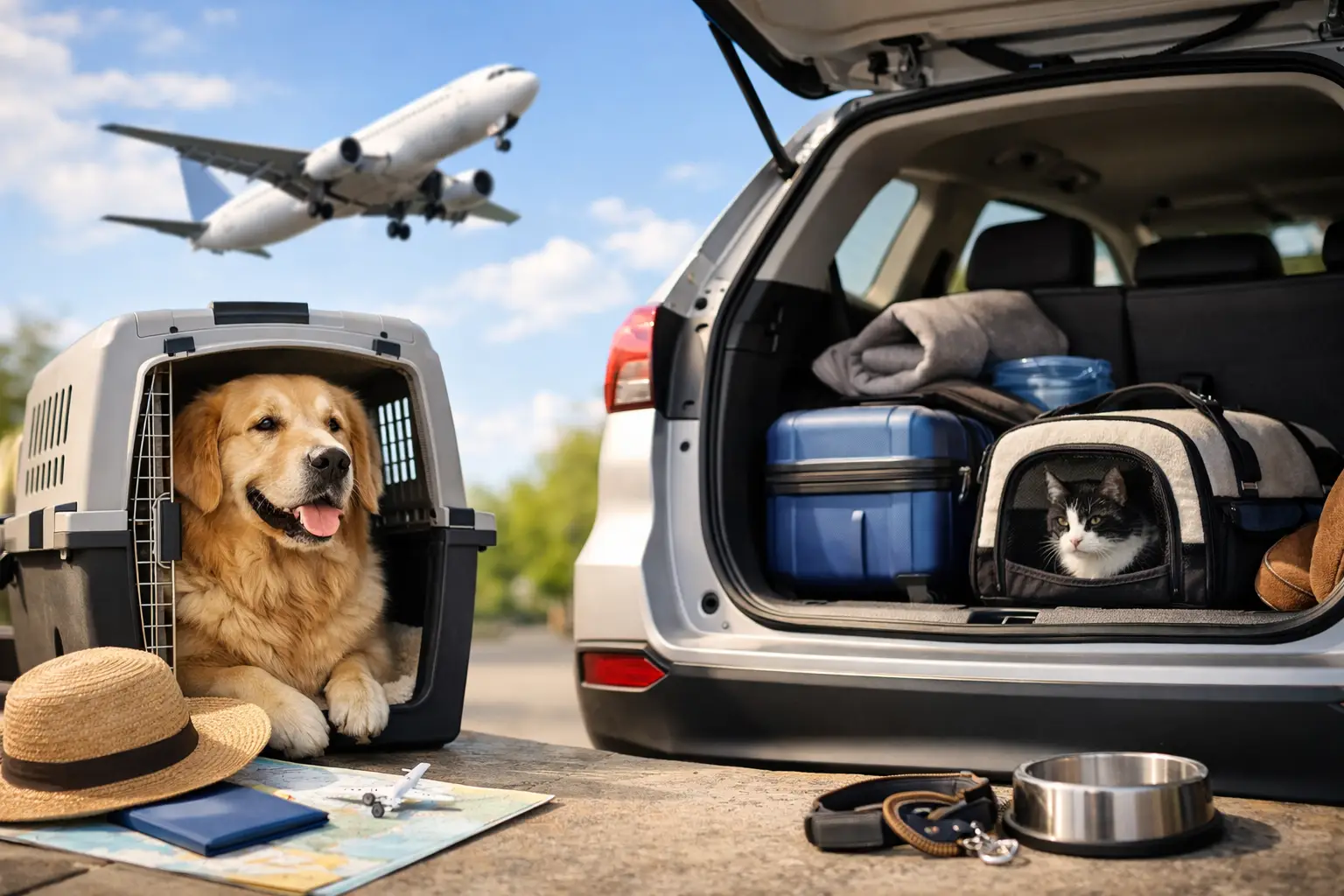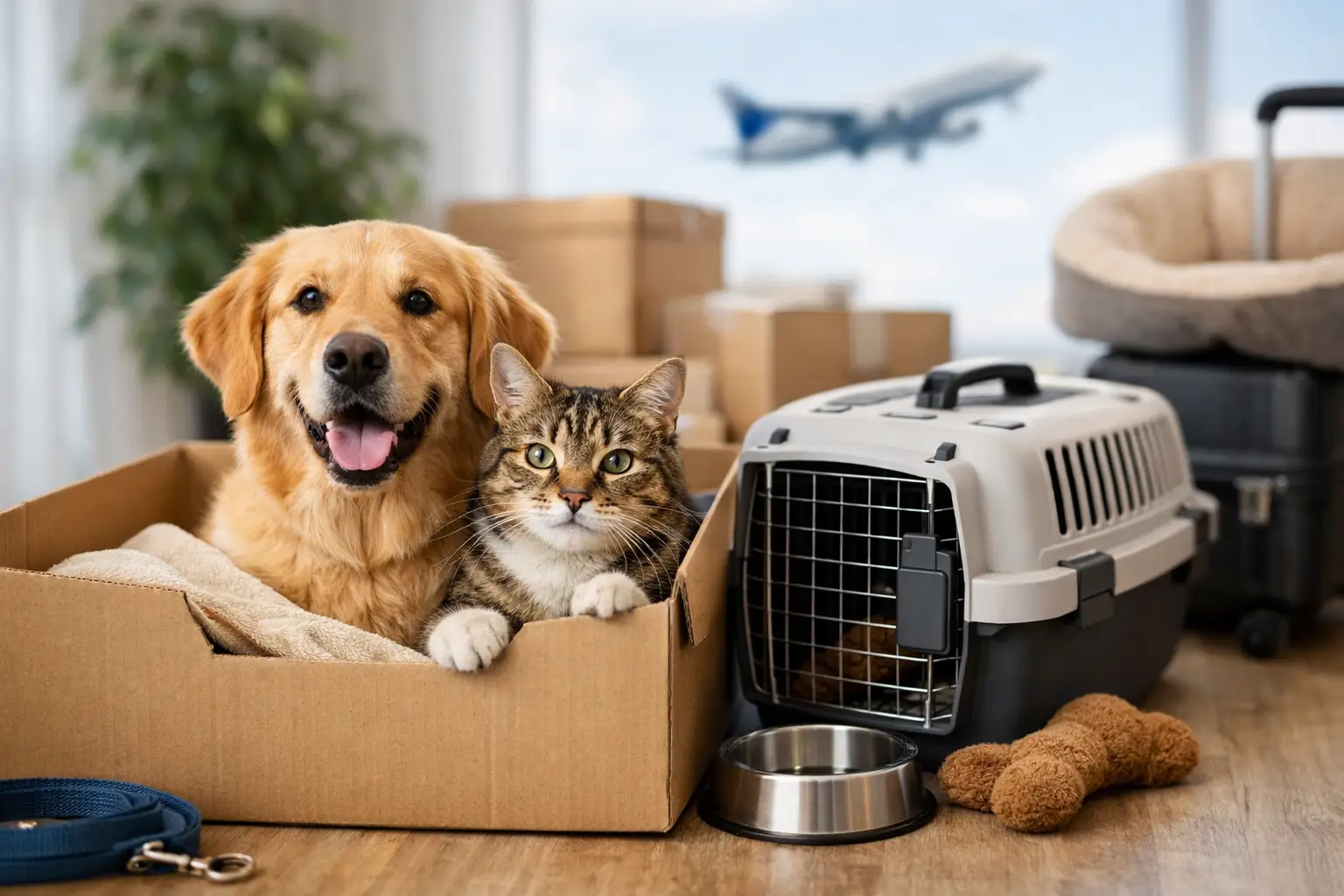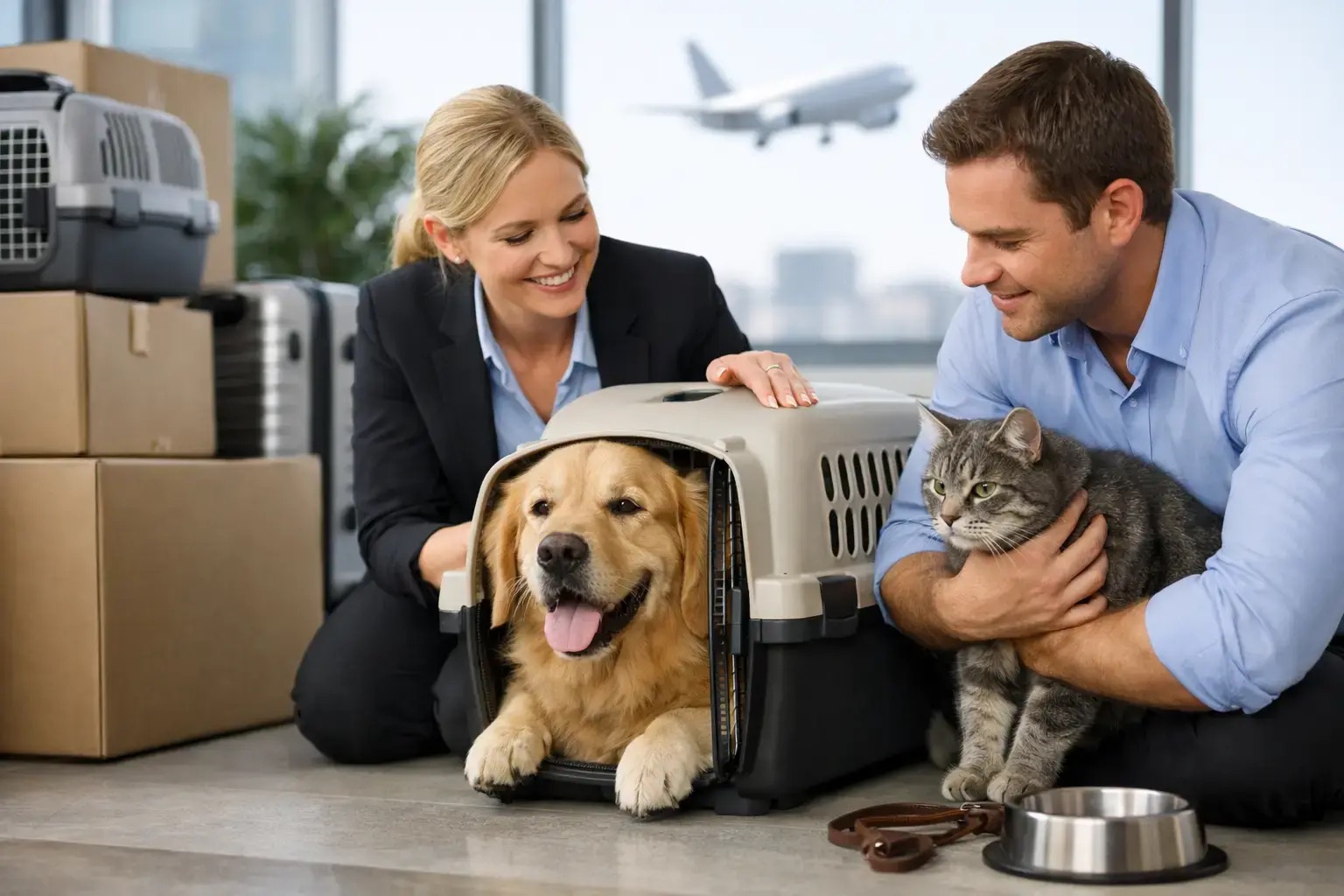
A job offer can come with a start date, a moving allowance, and a carefully planned household move. Yet for many employees, the most personal part of the transition is still unresolved: how will their dog, cat, or other animal companion travel safely to the new home? Corporate pet relocation turns that uncertainty into a thoughtfully managed care plan, so pets are not treated as an afterthought in a major family decision. Pets are just not a box or container filled with items. Rather, they are your treasured companion that requires the utmost respect, care, love and affection when being transported; sometimes for very long distances that can also seem to require lots of patience on your behalf.
For employers, relocation teams, and traveling professionals, this service is more than a thoughtful benefit. It can reduce the pressure that causes employees to delay a move, question an assignment, or make rushed travel choices for a beloved companion. For pet parents, it provides something equally valuable: a clear plan, a caring point of contact, and visibility throughout the journey.
Why pet travel belongs in a relocation plan
A household relocation has dozens of moving parts, from housing and school schedules to vehicle delivery and final utility appointments. Pet travel has its own timelines and requirements that do not always align neatly with the rest of the move. Airline policies, health documentation, breed considerations and sometimes restrictions, crate requirements, weather restrictions, hotel stops, medication routines, and destination rules all deserve careful attention.
That complexity is especially meaningful when an employee is traveling before the family, beginning a temporary assignment, or moving between distant states on a fixed schedule. A pet may need to arrive after the new home is ready, travel with a companion rather than in cargo, or receive private transportation because of age, anxiety, medical needs, or a sensitive routine.
A considerate corporate relocation package recognizes that an animal companion’s welfare affects the employee’s peace of mind. When people know their pet is being monitored, comforted, and safely transported, they can focus more fully on settling into a new role and community.
What corporate pet relocation should include
The best arrangements begin with a consultation, not a one-size-fits-all quote. The travel plan should account for the pet’s species, age, temperament, size, health considerations, feeding schedule, preferred handling, origin, destination, and the family’s target move dates. A young puppy, senior cat, bonded pair, or exotic pet will not have the same ideal itinerary. Many details are needed and required in order to make the travel route a success for all involved, especially your lovely pet that definitely will needs lots of TLC along the way.
A quality provider should also explain the travel options in plain language. Shared ground transportation can be a practical choice for many interstate moves, particularly when a family wants a climate-controlled ride with scheduled rest and care breaks. In-cabin flight nanny service may be the better fit for pets that need to travel by air while remaining accompanied in the aircraft cabin. VIP Solo Premium Pet Transportation offers a private, direct journey for families who need one-on-one attention and greater schedule control.
The right choice depends on distance, timing, pet needs, and the family’s comfort level. The fastest option is not automatically the kindest one. A calm, well-managed road journey may be preferable for one pet, while another may benefit from accompanied commercial air travel to minimize time away from home.
Care standards should be specific
“Pet-friendly” is a pleasant phrase, but it is not a transportation standard. Families and corporate relocation coordinators should ask what care actually looks like during transit.
Look for USDA Registration where required, appropriately insured transportation, climate-controlled vehicles, carefully planned potty and hydration breaks, and staff who understand animal handling. Veterinary technician-approved personnel add another layer of confidence, particularly for pets with special feeding, medication, or observation needs. Clear protocols for weather, traffic delays, rest periods, and emergency communication matter just as much as a polished booking process.
Real-time visibility is equally reassuring. Life360 GPS tracking allows a family to see a pet’s progress without repeatedly wondering where the vehicle is or waiting for a generic status update. Direct communication and 24/7 support help parents feel connected to the journey, especially during a cross-country move when everything else can feel unsettled. The importance of any type of GPS Tracking cannot be emphasized enough as it gives peace of mind to pet owners.
A better experience for employees and relocation teams
Corporate relocation managers are often asked to coordinate benefits across many vendors. Pet transportation should not become another complicated handoff that employees must solve alone. A concierge-style provider can simplify the process by gathering the details early, recommending a suitable service level, confirming logistics, and communicating directly with the pet parent while maintaining appropriate coordination with the relocation team.
For the employee, this reduces the burden of comparing unfamiliar transport options during an already demanding transition. They should understand what is included, when their pet will depart and arrive, what to prepare, and who to contact at any hour if a concern arises. Clear expectations are a form of care.
For the employer, a reliable pet relocation solution supports a more human-centered mobility program. It sends a practical message: the organization understands that employees do not leave family members behind when they accept a new opportunity. This can be particularly meaningful for high-value hires, long-distance transfers, military-adjacent moves, and professionals accepting temporary assignments away from their established support network.
Planning the journey without rushing the pet
Early planning creates more options. Ideally, pet transportation should be discussed as soon as the employee knows the general move window. That gives time to evaluate health certificate needs, carrier sizing, flight availability if applicable, driving distance, seasonal weather conditions, destination regulations, and the readiness of the new residence.
The pet’s transition at both ends also matters. Before departure, families should provide accurate feeding instructions, medications, veterinary contact information, behavioral notes, contact information for communicating via phone and email and familiar comfort items when appropriate. A transport team should know whether a pet is shy with strangers, prone to motion sickness, sensitive to loud sounds, or accustomed to a particular handling routine.
Arrival should be treated as a handoff, not simply a drop-off. The receiving person needs a confirmed arrival window, time to settle the pet into a quiet area, and access to food, water, a leash, litter supplies, or other essentials. When a family is still in transit or a home is not yet available, the travel plan may need to be adjusted rather than forcing a pet into an unsuitable schedule.
International and specialized travel require added care
Worldwide travel needs introduce another higher and more in-depth level of documentation and coordination. Entry rules can vary by country and may involve vaccination timing, health certificates, microchip requirements, import permits and fees, approved carriers, or other conditions. These requirements can change, so a plan should be built around the specific destination and current travel rules rather than assumptions.
Specialized animal travel also calls for an individualized assessment. Cats often need a lower-stimulation experience than dogs. Very young animals require close attention to feeding and temperature. Exotic pets may have different enclosure, permit, and environmental needs. In each case, the goal is to choose an arrangement that protects welfare while meeting the practical demands of the move. Specific Pet Certifications are usually and normally required as well. Let's not forget also that experience with an Exotic Pet is of vital importance due to many factors, but especially due to the fact that many of them are usually quite financially costly and typically fairly rare, thus, the categorization of being an Exotic Pet.
Questions worth asking before booking
Before selecting a provider, ask how the pet will travel, who will be responsible for hands-on care, and how often the family will receive updates. Ask whether vehicles are climate-controlled, whether the transporter is properly USDA Registered and Insured, and how breaks, meals, medications, and unexpected delays are handled.
It is also wise to ask whether the provider can tailor the service to the animal rather than asking the animal to fit a fixed route. Transparency around pricing, timing, care practices, and communication helps families make a confident decision. Low-cost transport can appear attractive until it leaves unanswered questions about being USDA Registered as a Pet Transporter, supervision, conditions, insurance, or a pet’s daily needs.
Puppies Breath Pet Concierge approaches each relocation as a personal responsibility, pairing structured travel planning with the tender loving care furry family members deserve. When a move is on the horizon, begin the pet conversation early and give your companion a journey planned with the same care as their new home.
Ready to Plan Your Pet's Corporate Relocation?
Speak with our pet travel concierges today to design a safe, comfortable, and personalized travel plan for your furry family member.
Request a Consultation