Pet Courier Versus Airline Cargo for Your Pet
A travel decision can feel very different when the passenger cannot tell you whether they are cold, thirsty, frightened, or ready for a break. When weighing pet courier versus airline cargo, the right choice is rarely about simply finding the fastest route. It is about matching your animal companion’s age, temperament, health, destination, and need for human reassurance with a travel plan that treats their wellbeing as the priority.
Airline cargo can be a practical option in select circumstances, particularly for certain international moves or destinations that are difficult to reach by road. A dedicated pet courier, whether by climate-controlled ground transport or accompanied in-cabin air travel, offers a more hands-on experience. Neither option is automatically right for every pet. The meaningful difference is the level of individual oversight available throughout the journey.
Pet Courier Versus Airline Cargo: The Core Difference
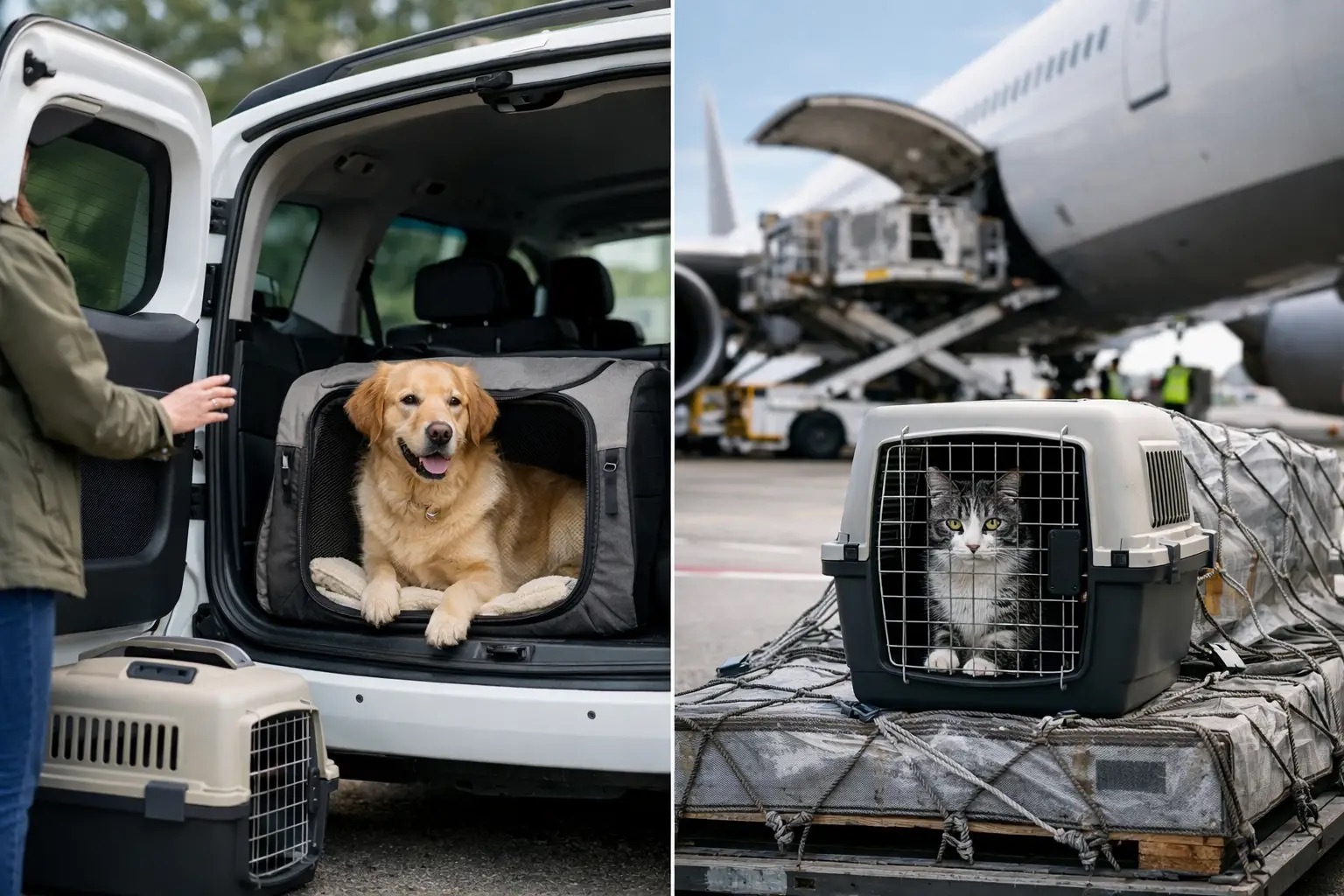
Airline cargo transport places a pet in an airline-approved travel kennel and moves them through the carrier’s cargo process. Depending on the airline, route, aircraft, and pet’s size, an animal may travel in a designated live-animal cargo area or be accepted through a separate cargo facility. The pet is handled according to airline procedures, with scheduled handoffs between check-in, ramp personnel, flight crews, and arrival teams.
A pet courier is a person or specialized transport team responsible for the animal’s journey from pickup through delivery. This may mean traveling by road in a properly equipped vehicle, or flying with a small pet in the cabin as a flight nanny. The courier’s work is centered on the pet rather than on moving freight within an airline schedule.
That distinction matters when a puppy needs a calm voice after a nap, a cat needs a quiet check-in after a long stretch of travel, or a senior dog needs medication and a carefully timed potty break. With a concierge transport service, someone is assigned to notice those details and communicate them to you along the way. Communication can be via modern cell phone means via audio and visual contact.
What The Airline Cargo Experience Can Look Like
For an owner with a straightforward itinerary, an airline cargo booking may offer direct access to a faraway destination. Airlines have detailed kennel requirements, health-document rules, breed restrictions, temperature policies, maximum onboarding limits, and check-in windows. Those policies exist for good reason, but they can make the experience less flexible than families expect.
Your pet may need to arrive at the cargo facility hours before departure and remain in a kennel until the flight is loaded. On arrival, pickup may also take place at a cargo building rather than at the passenger terminal. If weather, aircraft availability, or a connection changes, the airline’s operational needs determine the next steps. Staff members may be trained to handle live animals, but they are also responsible for a large volume of cargo and flight activity.
Air cargo is not inherently careless or unsafe. Reputable airlines follow live-animal procedures and may restrict bookings during periods of extreme heat or cold. Still, the experience is designed around commercial aviation operations, not individualized companionship. For an especially anxious pet, a very young animal, or a pet requiring frequent observation, that is an essential trade-off to consider.
Cabin Travel Is Different From Cargo Travel
Pet owners sometimes hear “air travel” and assume every animal travels in the cargo hold. That is not the case. A flight nanny typically accompanies a small pet that meets airline size and carrier requirements in the passenger cabin. The pet remains near the nanny for the duration of the flight, subject to airline rules, and the nanny manages airport transitions, comfort checks, and safe handoff at the destination.
This can be a thoughtful solution for puppies, kittens, and smaller companions traveling long distances. It does, however, depend on airline availability, the pet’s size, route logistics, and the destination’s entry requirements. Larger dogs generally cannot travel in the cabin on commercial flights unless they are trained service animals meeting strict applicable rules and regulations.
What A Dedicated Pet Courier Changes
A professional courier service is built around active care. In ground transport, that often includes a climate-controlled vehicle, clean and secure travel accommodations, planned exercise and potty breaks, fresh water, feeding according to the pet’s routine, Real-Time GPS Tracking and direct supervision during each stop. Rather than waiting in an airport cargo area, your pet remains with the transport team.
The most reassuring services also create visibility for the family. Real-Time GPS Tracking can show where the vehicle is, while regular updates provide the context a map cannot: whether your dog settled in after a break, whether your kitten ate, or when the team expects to arrive. That communication can be especially valuable for breeders sending a puppy to a new family or for parents arranging a reunion after a move.
At Puppies Breath Pet Concierge, journey planning can include shared ground travel, accompanied in-cabin flight nanny service, or VIP Solo Pet Transportation. Each option is designed around the animal’s needs and the family’s timeline, rather than asking every pet to fit one standard shipping process.
Comparing Comfort, Timing, And Cost
Ground courier travel usually takes longer than a nonstop flight, particularly across several states. For some pets, though, a longer journey with regular care can be easier than the stress of airport processing, unfamiliar cargo surroundings, and restricted access to a handler. A calm dog who enjoys car rides may do beautifully on a well-managed road trip. A cat who becomes distressed by changes in routine may benefit from the quietest, most direct option available.
Airline cargo may sometimes carry a lower upfront price than private or accompanied service, but the quoted fare is only one part of the decision. Families should ask about the approved kennel, health certificate, cargo-terminal transportation, delivery arrangements, and the cost of addressing a delay. A premium courier service costs more because it includes human attention, planning, communication, lots of time and a care-focused environment throughout the trip.
VIP Solo Pet Transportation is the most personalized option. It can reduce exposure to other animals, allow for a direct itinerary, and offer one-on-one attention that is particularly helpful for medically sensitive pets, high-anxiety companions, or families with strict timing needs. Shared ground transport can be a more economical concierge choice, but it may involve a carefully planned multi-pet route and a longer delivery window.
Safety Questions Every Pet Parent Should Ask
The company name alone should never make the decision for you. Ask clear questions, and expect clear answers. A responsible provider should be comfortable explaining how they manage animal welfare, delays, communication, and emergencies.
Before booking, confirm these essentials:
- Is the transporter properly registered for the type of travel being provided, including USDA Registration as a Pet Transporter where required for ground transport?
- Are vehicles climate-controlled, secured for animal travel, and cleaned between journeys?
- Who is supervising your pet, and what experience or veterinary guidance informs their care practices?
- How will you receive updates, and is GPS visibility available during ground travel?
- What insurance coverage applies, and what is the plan if weather, traffic, illness, or a flight disruption changes the itinerary?
For airline cargo, also ask the airline whether your pet’s breed, age, kennel, route, and seasonal travel dates are eligible. Snub-nosed breeds, very young animals, and pets with certain health concerns may face additional restrictions. Your veterinarian should be part of the conversation, especially if your companion has a medical condition, takes medication, or has previously struggled with travel anxiety.
Which Option Fits Your Pet’s Journey?
Airline cargo may make sense when an international destination, a remote route, or a large pet’s travel needs leave few alternatives. It can also work for an experienced traveler with a calm temperament when the airline offers an appropriate route and conditions are favorable. The best cargo arrangement is typically a direct flight with careful pre-travel preparation, an airline-compliant kennel, and reliable pickup on both ends.
A pet courier is often the stronger fit when personal attention is non-negotiable. Consider it for breeder-to-home puppy delivery, cross-country family moves, senior pets, animals with special feeding routines, cats that need quiet reassurance, and anyone who wants updates rather than uncertainty. Accompanied cabin travel can be especially appealing for small pets who would benefit from staying close to a dedicated caregiver during flight.
There is no prize for choosing the cheapest or quickest option if it leaves you worried about your furry family member every mile of the way. The most caring choice is the one that gives your pet appropriate supervision, realistic travel conditions, and a calm, well-prepared handoff into their next chapter.
Ready to plan a caring, personalized journey for your pet?
At Puppies Breath Pet Concierge, we combine USDA-registered transport, climate-controlled vehicles, real-time GPS visibility, and attentive hands-on care so your animal companion travels with peace of mind. Contact us today for a free quote.
Get a Free QuoteMore Articles You Might Like
How To Ease Pet Travel Anxiety Before A Big Trip
September 1, 2026
A carrier that suddenly appears, a packed suitcase, a changed routine - pets notice these signals long before the journey begins. Discover proven ways to ease pet travel anxiety, prepare before travel day, and keep your companion calm and secure.
Read More »
Are Animal Couriers Insured? A Pet Parent's Guide
August 31, 2026
A cross-country pet journey can involve far more than getting from Point A to Point B. When your companion travels in someone else's care, the question is personal: are animal couriers insured? Learn how coverage works and the critical safeguards every pet parent should verify.
Read More »